
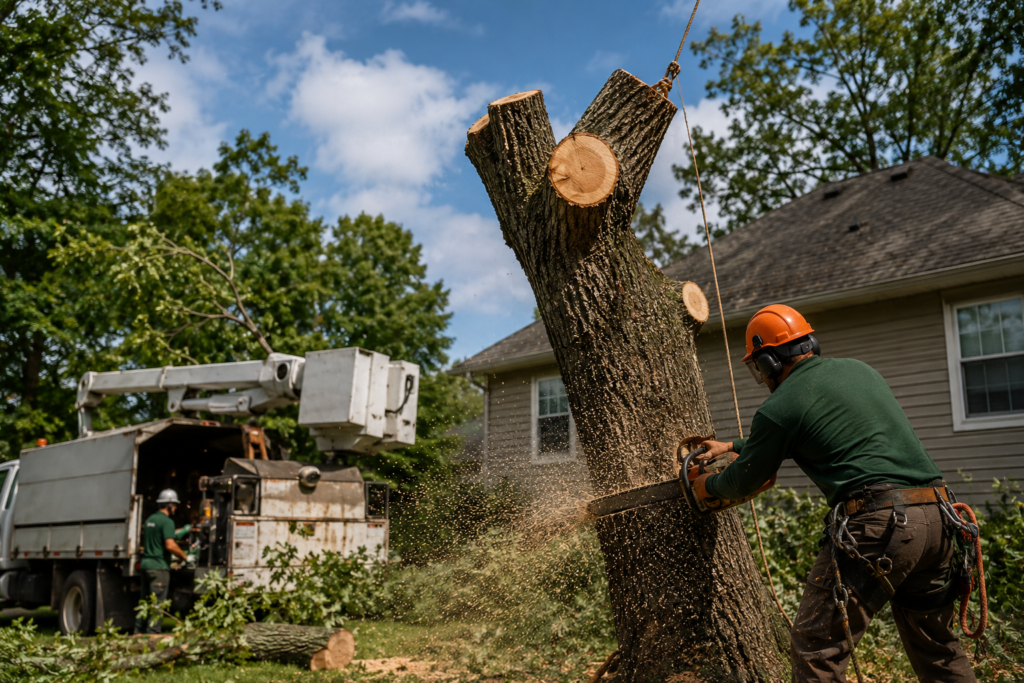
Trees add beauty, shade, and real value to Indianapolis properties, but not every tree deserves to stay. A dead, diseased, or structurally compromised tree can become a serious liability overnight, especially during Indiana’s unpredictable storm season. Knowing when to remove a tree before it causes damage protects your home, your family, and your investment. In this guide, we’ll discuss the clearest warning signs that a tree needs to go, and what to do when that moment arrives.
Factors That Show When To Remove a Tree
Indianapolis is home to a rich urban tree canopy, but it’s under pressure. A study by American Forests found that over the past decade, Indianapolis’ tree canopy has declined, from covering an average of 33% of the city to just 29%. Much of that loss stems from aging, diseased, and storm-damaged trees that go unaddressed for too long.
Indianapolis is home to urban forests, most of which are unprotected and could be lost at any time. That’s why homeowners across the city need to be proactive. The sections below cover the four biggest red flags that signal it’s time to call a professional tree removal service.
- Structural Damage
A tree with structural damage is a ticking clock. Look for large cracks or splits running through the trunk, broken major limbs, or a noticeable lean that wasn’t there before. If more than 50% of the tree’s structure is compromised, removal is almost always the safer and more cost-effective option.
- Disease/Decay
Diseased trees don’t always look sick at first glance. Watch for soft, spongy wood at the base, mushroom growth around the roots, discolored or oozing bark, and leaves that wilt, yellow, or drop early. Fungal infections like oak wilt or Dutch elm disease spread quickly and can jump to neighboring trees if left untreated. Once decay reaches the tree’s core, no amount of pruning or treatment will reverse it.
- Safety Hazards
Sometimes a tree doesn’t have to be sick to be dangerous. Branches hanging directly over your roof, driveway, or power lines are a serious liability. Trees leaning toward structures, or those with co-dominant stems (two trunks competing for dominance), are prone to sudden failure. In Indianapolis, where storms can bring heavy ice loads and high winds, a hazardous tree can cause thousands of dollars in property damage, or worse.
- Root Damage
Root damage is often invisible until it’s too late. Signs include heaving soil near the base, roots that have been severed by construction or excavation, and a tree that rocks noticeably during light wind. Surface roots circling the trunk (called girdling roots) slowly strangle the tree from within. Foundation work, new driveways, or utility line installation near mature trees can silently destroy the root structure over time.
Best Season For Tree Removal
While tree removal can be performed any time of year, timing matters, both for the health of your remaining landscape and for getting the job done efficiently.
- Late Winter to Early Spring
Late winter to early spring, roughly February through April in Indianapolis, is widely considered the best time for tree removal. Trees are dormant, meaning there’s less sap flow and less stress on surrounding vegetation. Bare branches also make it easier for crews to see the full structure of the tree, improving both safety and precision.
The frozen or firm ground during this period reduces soil compaction and lawn damage from equipment. Additionally, demand for tree services is lower in the off-season, which often means faster scheduling and more competitive pricing. If you’ve spotted a warning sign in the fall, don’t wait until summer; book your removal before the spring rush begins.
Key Considerations While Removing a Tree
Tree removal isn’t just about getting a tree down; it involves planning, proper evaluation, and choosing the right team. Here’s what every Indianapolis homeowner should factor in.
- Cost Efficiency
Tree removal costs vary based on height, diameter, location, and condition. In Indianapolis, most standard removals fall in the range of a few hundred to over a thousand dollars, depending on complexity. While DIY removal might seem like a way to save money, it rarely is. Improper cuts, falls, and equipment misuse lead to injuries and property damage that far exceed professional fees.
- Right Assessment
Not every struggling tree needs to come down. A proper assessment by a trained tree removal professional determines whether the tree can be saved through pruning, cabling, disease treatment, or fertilization. The evaluation should examine the root zone, bark condition, canopy density, structural integrity, and proximity to structures.
- Professional Tree Removal Services
Attempting to remove a large tree without training or equipment is one of the most dangerous things a homeowner can do. Professional tree removal crews bring the right tools, insurance, and expertise to handle jobs of any size safely. They manage directional felling, crane-assisted removal for tight spaces, full debris cleanup, and stump grinding, leaving your property clean and hazard-free.
Hire Truelove Services, Indianapolis’ Trusted Tree Removal Experts
When a tree needs to come down, you need a team you can trust to do it safely, cleanly, and at a fair price. Truelove Services has built a strong reputation across Indianapolis for professional tree removal, stump grinding, pruning, and emergency storm cleanup. Their crews serve both residential and commercial clients, delivering reliable results without cutting corners. They also offer lawn care, snow removal, and seasonal property maintenance, making them your one-stop partner for year-round property upkeep. Request a free estimate today and let the professionals handle the hard work.
If damage is limited to a few branches and the trunk and root system are healthy, pruning may be sufficient. However, if the tree is leaning, hollow, heavily diseased, or poses an imminent safety risk, removal is the safer choice. A professional inspection is the best way to determine this.
Yes, in some cases. Indianapolis and surrounding municipalities may require a permit for removing large or mature trees, particularly in certain districts. Always check with your local authority or ask your tree service provider before proceeding.
Tree removal takes down the above-ground portion of the tree. Stump grinding eliminates the remaining stump and surface roots, preventing regrowth, pest attraction, and tripping hazards. Most homeowners opt for both at the same time.